
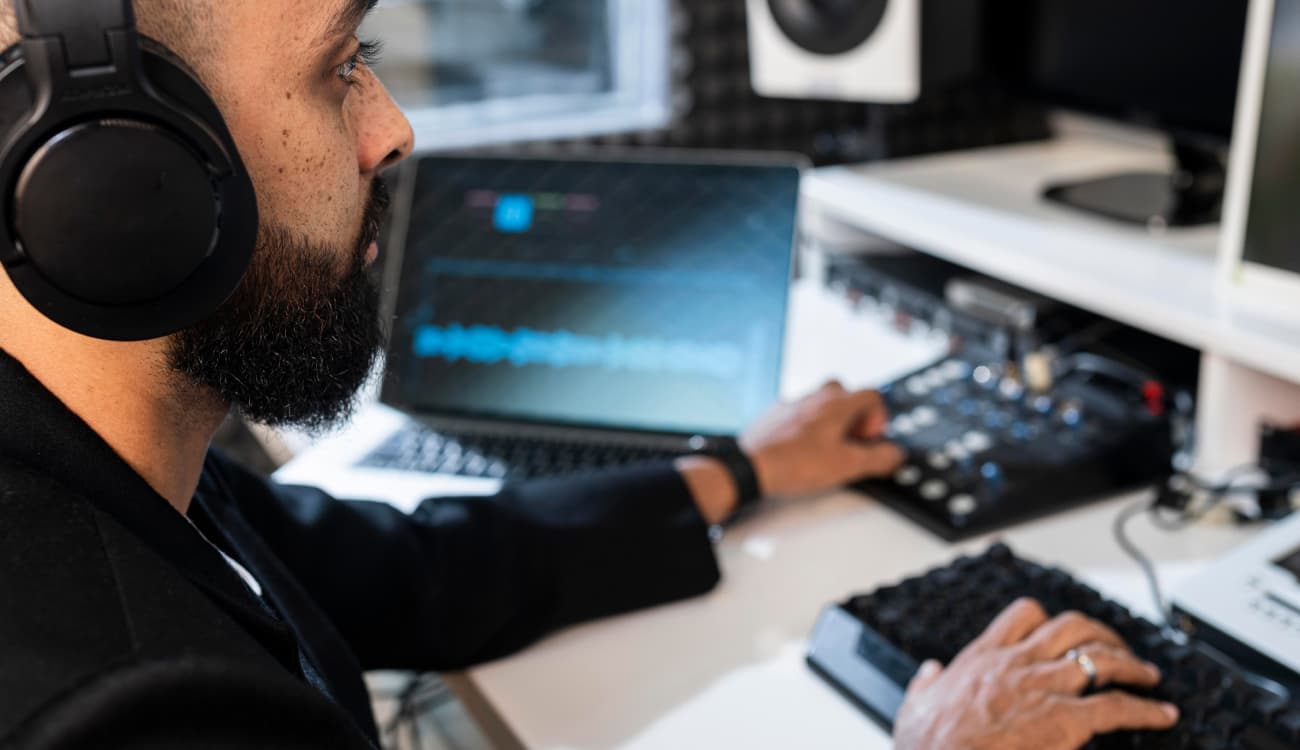
Learning how to make money with music production from home can turn your creative skills into a flexible online business. You can sell beats, produce custom tracks, mix songs for independent artists, create sample packs, license background music, or teach music production without renting a professional studio.
The best approach depends on your skills, equipment, musical style, and available time. This guide explains practical ways to earn money as a home music producer, where to find clients, how to price your services, and how to build a sustainable income over time.
10 Ways to Make Money With Music Production From Home
You do not need to become a famous artist to earn money from music. Many producers work behind the scenes, helping singers, rappers, content creators, podcasters, game developers, and other musicians finish their projects.
🎹 1. Sell beats online
Create hip-hop, trap, R&B, pop, or other instrumentals and sell licenses to artists through beat marketplaces or your own store.
Best for: Beatmakers with a growing catalog.
🎚️ 2. Mix songs for clients
Balance vocals, drums, instruments, and effects so independent artists can release more polished recordings.
Best for: Producers with strong listening and mixing skills.
🎧 3. Offer mastering services
Prepare finished mixes for distribution by checking tonal balance, loudness, dynamics, and technical delivery requirements.
Best for: Producers who understand audio engineering.
🎤 4. Produce custom songs
Build personalized tracks for singers, rappers, independent artists, and creators who need a specific sound.
Best for: Versatile producers who can work from a brief.
🎛️ 5. Sell sample packs
Create original drum kits, loops, MIDI files, presets, and sound effects for other producers.
Best for: Producers with sound design skills.
🎬 6. License music for videos
Offer original instrumentals for advertisements, YouTube videos, podcasts, games, and independent films.
Best for: Producers who create versatile background music.
📚 7. Teach music production
Offer online lessons, tutorials, mentoring sessions, or recorded courses about your DAW and production techniques.
Best for: Experienced producers who enjoy teaching.
🎵 8. Release your own music
Distribute original tracks to streaming services and build a catalog that can earn recording royalties over time.
Best for: Producers developing an artist identity.
🎮 9. Create music for games
Compose background loops, menu themes, soundscapes, and short musical cues for independent game developers.
Best for: Producers who can follow a creative brief.
📺 10. Create music content
Publish beatmaking videos, production tutorials, breakdowns, and sound design demonstrations to attract an audience.
Best for: Producers willing to publish consistently.
1. Offer Music Production Services From Your Home Studio
Selling a service is one of the most direct ways to monetize your skills. Instead of waiting for a song to attract streams, you work for a customer who needs a specific result.
Services you can offer online
- Beat production: Create instrumentals for rappers, singers, and independent artists.
- Vocal editing: Clean up timing, organize takes, and prepare vocals for mixing.
- Mixing: Balance stems and improve clarity, depth, and consistency.
- Mastering: Prepare approved mixes for release.
- Podcast audio editing: Remove unwanted pauses, reduce distracting noise, and balance speech.
- Audio cleanup: Improve dialogue recordings for video creators and businesses.
- Custom music: Create short themes, intros, outros, and background tracks.
Where to find clients
You can list services on freelance marketplaces, build a simple portfolio website, or contact independent artists and creators whose work fits your style.
- Fiverr — create service listings for mixing, beatmaking, editing, and production.
- SoundBetter — explore opportunities to connect with artists seeking music professionals.
- Upwork — look for audio editing, podcast production, and music-related freelance projects.
How to get your first production client
- Choose one service instead of advertising every skill you have.
- Create three strong examples that demonstrate the quality of your work.
- Write a clear description of what the customer receives.
- Set a delivery time and a reasonable revision policy.
- Share your portfolio with relevant artists and prospective clients.
- Deliver on time and ask satisfied customers for permission to use approved work as a portfolio example.
Only promise deliverables you can consistently provide. Adjust the offer to your skills and the needs of your target customers.
2. Make Money Selling Beats Online
Beat selling is a popular business model for producers working in hip-hop, trap, R&B, pop, and related genres. You create instrumentals and offer licenses that define how artists can use them.
Beat leases versus exclusive licenses
A non-exclusive beat lease generally allows multiple customers to use the same instrumental under defined terms. An exclusive agreement typically gives the buyer broader or exclusive rights as specified in the contract, subject to any rights retained by the producer and the agreement’s conditions.
| License type | How it works | What to define |
|---|---|---|
| Basic non-exclusive | Multiple customers may license the beat. | Permitted uses, distribution limits, credit, and file format. |
| Premium non-exclusive | Similar to a standard lease but with different deliverables or usage limits. | Stems, trackouts, streaming limits if applicable, and rights granted. |
| Exclusive | Rights are granted under an exclusive agreement. | Scope of exclusivity, existing licenses, ownership, publishing, and royalties. |
| Custom beat | You produce an instrumental tailored to one client’s brief. | Price, revisions, deadlines, ownership, and commercial use. |
Do not assume every marketplace license is identical. Read the terms carefully, particularly when selling exclusives or allowing commercial releases.
Where to sell your beats
- BeatStars — a marketplace and platform for beat licensing and producer tools.
- Airbit — a beat-selling platform for producers and artists.
- Fiverr — useful for custom beat commissions and production services.
- Your own website or digital store — offers greater control over your brand and customer relationship, although you must attract visitors yourself.
How to make your beats more appealing
- Focus on a recognizable niche, such as melodic trap, boom bap, R&B, or lo-fi.
- Use clear titles that describe the style and mood of each instrumental.
- Upload consistent, high-quality previews.
- Offer clearly explained license options.
- Make it easy for customers to understand the files and rights they receive.
- Publish new work regularly without sacrificing quality.
3. Sell Sample Packs, Drum Kits, and Presets
If you enjoy sound design, you can package your work into digital products for other producers. Unlike custom client work, a sample pack can be sold to multiple customers, subject to its license and the marketplace’s terms.
Digital products you can create
- Original drum one-shots and percussion sounds.
- Melodic loops and chord progressions.
- MIDI files for melodies, bass lines, or chord patterns.
- Synthesizer presets and sound banks.
- Sound effects and atmospheric textures.
- Project templates for specific DAWs.
- Educational resources, such as mixing presets or workflow guides.
How to create a sample pack that sells
- Choose a narrow audience, such as beginners producing lo-fi or experienced producers making house music.
- Create a coherent collection of sounds with consistent quality.
- Check file names, tempo labels, key information, and metadata.
- Prepare audio previews so buyers can hear the contents.
- Write a clear license explaining permitted and prohibited uses.
- Publish the product through a suitable marketplace or your own storefront.
4. Earn Money Through Music Licensing and Royalties
Music licensing allows another person or organization to use your music under agreed conditions. Potential customers include video producers, advertising agencies, independent filmmakers, game developers, podcasters, and businesses.
Sync licensing for videos, films, and advertisements
Synchronization licensing concerns using music with visual media. Depending on the deal, a placement may involve an upfront fee, royalties, or both. The process can take time because clients look for tracks that fit a particular scene, audience, budget, and usage requirement.
To prepare a useful catalog for licensing:
- Create clean, professionally organized instrumental tracks.
- Prepare alternate versions, such as shorter edits or versions without certain elements.
- Keep metadata accurate, including title, composer, mood, and contact information.
- Know who owns the master recording and the underlying composition.
- Use only samples and recordings you are legally allowed to license.
Release your own music on streaming platforms
You can distribute original tracks through a music distributor that delivers to services such as Spotify, Apple Music, and other streaming platforms. Depending on your agreements and rights, you may earn recording royalties from eligible usage.
However, streaming income is variable. There is no universal fixed payment for every play, and results depend on factors such as the service’s payment model, listener activity, rights ownership, distributor terms, and territory.
For this reason, do not rely on streaming alone when starting a home music business. Build a catalog while pursuing services, beat licenses, or other sources of income.
Sell music directly to listeners
Bandcamp lets artists sell music and merchandise directly to fans. Direct sales can be useful if you have a distinct sound, a loyal audience, or a niche catalog that listeners want to support.
Remember that buying a track or uploading it to a platform does not automatically settle every licensing issue. Read the terms for distribution, commercial usage, and any third-party material you include.
5. Make Money Producing Music for YouTube and Content Creators
Online creators often need music for intros, tutorials, travel videos, podcasts, product demonstrations, and short-form content. You can offer custom tracks or license existing music when you have the necessary rights.
Potential services for content creators
- Short intro and outro music.
- Background tracks for tutorials and explainers.
- Podcast themes and transitions.
- Short audio logos and brand sounds.
- Instrumentals tailored to a specific video length.
- Audio editing and loudness balancing.
How to approach potential customers
Look for creators whose content would benefit from original music. Prepare a short portfolio with several moods and lengths, then send a concise message explaining how your work could fit their content.
For example, a travel channel may want upbeat cinematic instrumentals, while a software tutorial channel may prefer subtle background music that does not compete with narration.
If you publish your own production videos, YouTube can also become an additional income stream. Monetization depends on eligibility, audience performance, platform rules, and the originality of your content. Repetitive uploads or music that you do not have the right to monetize can create problems.
See YouTube’s official monetization guidance for information about original content and commercial rights.
6. Teach Music Production Online
If you have strong skills in a particular DAW or production technique, teaching can provide another source of income. You do not need to be an internationally known producer, but you should be able to demonstrate the skills you teach.
Ways to teach from home
- One-on-one music production lessons over video calls.
- Beginner tutorials for FL Studio, Ableton Live, Logic Pro, or another DAW.
- Courses about mixing, beatmaking, sound design, or arrangement.
- Project feedback and production coaching.
- Downloadable guides, templates, and practice sessions.
How to attract students
Choose a specific outcome, such as teaching beginners how to create their first beat or helping vocalists prepare their recordings for mixing. Publish useful demonstrations, explain what students will learn, and provide a clear description of your experience.
Start with live lessons if you want direct interaction and feedback. Consider recording a course after you understand which questions students ask repeatedly.
Best Platforms to Make Money With Music Production
Different platforms suit different business models. Choose based on how customers find you, the fees involved, the rights you need to manage, and the amount of control you want over your business.
| Platform | Potential use | Best suited to |
|---|---|---|
| BeatStars | Beat licenses and producer products | Beatmakers and instrumental producers |
| Airbit | Beat sales and online storefronts | Producers with a beat catalog |
| Fiverr | Fixed-scope freelance services | Mixing, mastering, custom beats, editing |
| SoundBetter | Music professional services | Producers, engineers, vocalists, musicians |
| Upwork | Freelance audio and music projects | Audio editors and project-based producers |
| Bandcamp | Direct music sales | Independent artists with a fanbase |
| YouTube | Production content and music discovery | Producers who publish consistently |
Platform fees, eligibility, geographic availability, and licensing rules can change. Review the current official terms before opening a store or accepting a client order.
How Much Should You Charge for Music Production?
Your pricing should reflect the complexity of the job, your experience, the rights being granted, the delivery requirements, and the amount of revision work included. There is no single price that works for every producer or market.
Example starting price menu
The following figures are illustrative planning examples in US dollars, not verified market averages. Adjust them to your portfolio, customer base, local market, and the time required for each project.
| Service | Illustrative starting range | What can affect the price? |
|---|---|---|
| Basic beat license | $20–$50 | License scope, file format, and usage limits. |
| Custom beat production | $75–$250+ | Originality, complexity, deadlines, and rights. |
| Basic song mix | $50–$150+ | Number of stems, editing, and revision requests. |
| Mastering | $25–$75+ | Track length, delivery needs, and complexity. |
| Podcast audio editing | $30–$100+ per episode | Recording length, noise problems, and editing scope. |
| One-on-one lesson | $20–$60 per hour | Experience, subject, preparation, and feedback. |
Calculate a minimum sustainable rate
Before setting a price, estimate how much time a project requires, including communication, preparation, editing, revisions, and file delivery.
Example: If you want to earn $20 per working hour and a mix takes three hours in total, your labor alone is worth $60. You may need to charge more to cover software, equipment, marketplace fees, taxes, and unpaid business time.
For beat licenses, also consider the long-term value of the music and the rights granted. A non-exclusive license and an exclusive agreement should not automatically have the same price.
How to Start a Home Music Production Business With a Small Budget
You do not need a large studio to begin. The essential requirement is a workflow that lets you deliver reliable results. Upgrade equipment when a specific limitation prevents you from completing paid work.
Essential equipment
- Computer: A machine capable of running your chosen DAW and audio projects.
- DAW: Software for recording, arranging, editing, and mixing.
- Headphones: A reliable pair for monitoring and editing.
- Audio interface: Useful when recording microphones or instruments.
- Microphone: Needed if you plan to record vocals or acoustic sources yourself.
- Backup storage: A reliable way to protect sessions, stems, and client files.
A MIDI keyboard and studio monitors can be helpful, but they are not mandatory for every production business. Start with what you have, learn the tools well, and upgrade based on actual customer requirements.
Keep your workflow professional
- Use organized project folders and consistent file names.
- Keep backups of active client projects.
- Confirm the sample rate, bit depth, and file formats required by each client.
- Use written agreements for deliverables, payments, rights, and revisions.
- Separate personal experiments from approved client deliverables.
How to Find Your First Paying Music Production Client
Your first goal should be to demonstrate a clear skill to a specific audience, not to advertise yourself as an expert in every aspect of music production.
Choose one service
Start with a focused offer such as custom beats, vocal editing, mixing, or podcast audio cleanup. A specific offer is easier to explain and price.
Build a small portfolio
Create three to five strong examples. If you have no clients yet, produce your own demonstration tracks or use material you have permission to share.
Publish a clear service listing
Explain who the service is for, what is included, what files customers need to provide, and how long delivery takes.
Reach out to relevant prospects
Contact artists, video creators, podcasters, or game developers whose projects fit your strengths. Personalize your message and explain the value you can offer.
Deliver a reliable first project
Confirm the brief, meet the deadline, communicate clearly, and request feedback. Use the experience to improve your process and future pricing.
Build repeat business
Offer consistent quality, keep client preferences organized, and make it easy for satisfied customers to hire you again.
30-Day Plan to Start Making Money From Home
Use this simple plan to move from learning and experimentation to a professional offer. The goal is to create a working business foundation, not to guarantee income within 30 days.
| Week | Focus | Tasks |
|---|---|---|
| Week 1 | Choose your offer | Pick one service, define your target customer, and research competing offers. |
| Week 2 | Create proof of skill | Finish three portfolio examples and prepare clear descriptions of your deliverables. |
| Week 3 | Publish and promote | Set up a profile or portfolio page, publish your offer, and contact relevant prospects. |
| Week 4 | Improve the process | Review responses, refine pricing and scope, follow up professionally, and plan the next month. |
Track your progress
Common Mistakes to Avoid
Relying only on streaming revenue
Streaming income can take time to build and varies considerably. Consider combining releases with client services, beat licensing, or digital products.
Offering too many services at once
Trying to sell mixing, mastering, songwriting, sound design, lessons, and every genre from day one can make your business difficult to understand. Start with a focused offer and expand as you gain experience.
Underpricing every project
Low prices may help you test an offer, but prices that do not cover your time and expenses are difficult to sustain. Define a scope and charge appropriately for extra revisions or additional work.
Using samples without checking their licenses
Not every sound found online is cleared for commercial use. Check the license for loops, vocals, presets, and samples before including them in a track you sell or license.
Ignoring written agreements
Agree on payment, delivery, revisions, ownership, credits, and permitted usage before starting substantial work. Keep a record of the terms accepted by both parties.
Expecting instant results
A portfolio and storefront do not guarantee customers. You may need to improve your offer, make more music, build relationships, and test different marketing approaches before finding a consistent source of work.
Frequently Asked Questions
Can you make money with music production from home?
Yes. Producers can earn by selling beats, producing custom songs, mixing and mastering, editing audio, selling sample packs, teaching, licensing music, and releasing original tracks. Earnings depend on skills, demand, pricing, rights, and the ability to find customers.
What is the easiest way to make money as a beginner music producer?
Start with a service you can already deliver reliably, such as simple beat production, basic audio editing, or beginner lessons in a skill you know well. Create portfolio examples and approach customers who need that service. Do not promise professional results beyond your current abilities.
Can I make money producing beats without a studio?
Yes. You can create beats using a computer, a DAW, headphones, and suitable software instruments or samples. A dedicated studio, expensive monitors, and large collections of plugins are not required to begin selling original work.
How much money can a home music producer make?
There is no reliable universal figure. Some producers earn occasional project fees, while others develop repeat clients and several income streams. Income varies with skill, workload, demand, pricing, expenses, rights, and marketing. Treat any guaranteed-income claim with skepticism.
Is selling beats better than mixing and mastering?
Neither is universally better. Mixing and mastering can generate payment per client project, while a beat catalog may create repeat sales from existing work. Many producers test one service and one catalog-based income stream instead of relying entirely on either approach.
Do I need expensive music production software?
No. You can begin with affordable or free software and upgrade when your work requires additional features. Clients usually care about the quality, reliability, and suitability of the final deliverable rather than the price of your DAW.
Can I make money from AI-generated music?
Potentially, if the relevant tool’s terms and the rights to all included material permit your intended commercial use. Check the service’s license, platform rules, and any applicable restrictions before distributing or monetizing AI-generated tracks. Commercial-use permission does not automatically guarantee exclusive copyright protection.
Can I make money from music production while living outside the United States?
Potentially. Many production services and digital products can be sold internationally, but platform eligibility, payment methods, fees, tax obligations, and local regulations vary by country. Check the terms of each service and the rules that apply where you live.
Final Thoughts: Build a Music Business From Home
Making money with music production from home is possible, but it takes more than creating good tracks. You need a clear offer, a portfolio that demonstrates your skills, reliable delivery, sensible pricing, and a way to reach customers.
If you are starting out, choose one service such as custom beats or audio editing and focus on getting your first paying clients. At the same time, build a catalog of original music, sample packs, or other products that can support your business over time.
Start small, finish projects, learn from customer feedback, and add new income streams when your initial workflow is working. A sustainable music business is built through consistent work and good business practices, not overnight success.