
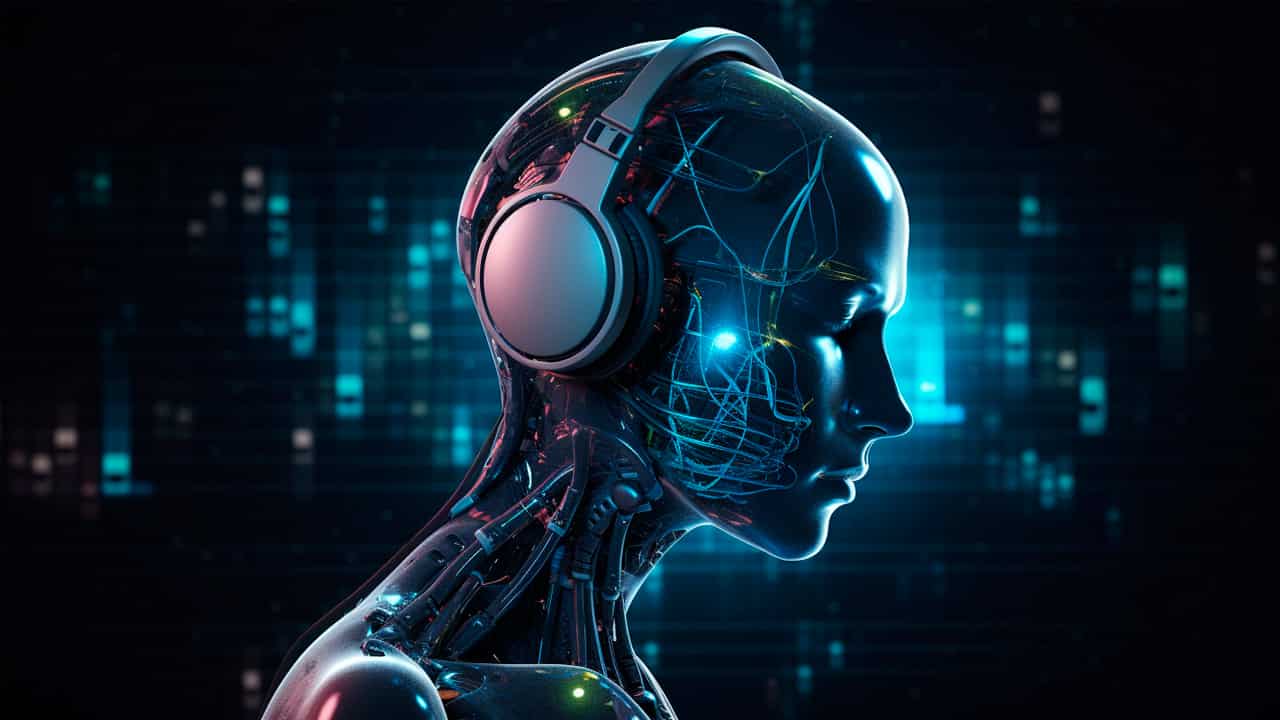
The question of whether AI can replicate groove—that ineffable quality that makes you want to move—has a surprisingly precise scientific answer: not yet, and perhaps not in the way currently conceived. Groove is not primarily a sonic phenomenon; it’s a neurological event. When humans perceive groove, they’re not just listening—they’re predicting, embodying, and resonating through interconnected auditory and motor systems in the brain. Recent neuroscience reveals that groove emerges from a specific neural architecture linking prediction error (syncopated rhythm violates beat expectations), motor engagement (regions associated with movement activate during passive listening), and embodied understanding of rhythm as movement. AI can generate technically proficient rhythmic patterns, even implementing microtiming variations that mimic human performances. But what AI cannot replicate—at least with current architectures—is the intentionality, embodied prediction, and lived emotional context that humans bring to groove production. A 2024 PLOS One study found that human-composed music scored 30-50% higher on authenticity and emotional expressiveness despite achieving identical technical proficiency. This report synthesizes contemporary neuroscience of rhythm and groove, examines where AI excels and fundamentally fails at rhythm generation, and articulates a practical path forward: hybrid human-AI workflows that preserve human intentionality while leveraging AI’s speed and precision.
Part I: What Is Groove? The Neuroscience of the Urge to Move
Before comparing human and AI groove, we must precisely define groove from a neuroscientific perspective—because groove is not what most people think it is.
The Subjective Experience
Ask musicians or dancers what groove is, and you’ll hear: “the vibe,” “the pocket,” “the feel,” “makes you want to move.” These descriptions are emotionally accurate but scientifically vague. Groove is deeply felt, yet its mechanisms remained mysterious until recent neuroimaging advances.
Six Scientific Components of Groove
Contemporary groove research identifies six interconnected components:
- Rhythmic and metrical structure: Recognition of beat organization (duple meter, triple meter, etc.)
- Motor entrainment: Brain regions associated with movement activate, even during passive listening
- Predictive timing: Anticipation of where the beat will fall
- Embodied resonance: Neural oscillations synchronize with the rhythm
- Syncopation perception: Recognition of rhythmic patterns that violate beat expectations (the surprise)
- Emotional/affective response: Subjective pleasure from the experience
Critically, groove is not the beat itself. Groove is the controlled violation of beat expectations—the syncopation, the pocket, the strategic deviation that creates tension and release.
The Neuroscientific Definition: Prediction Error
A 2024 Science Advances study offers the most precise definition of groove to date. Using MEG (magnetoencephalography) neuroimaging, researchers identified a three-layer neural model explaining groove perception:
Layer 1: Auditory Rhythm Processing
Your brain’s auditory cortex analyzes the actual incoming rhythm at 2-Hz frequency (the beat frequency).
Layer 2: Beat Prediction
Simultaneously, your motor-auditory system generates expectations about where the beat should be. The supplementary motor area (SMA) and basal ganglia create oscillatory predictions based on rhythmic regularities.
Layer 3: Prediction Error (= Groove)
Your brain compares what’s predicted (Layer 2) against what’s actually received (Layer 1). When syncopated rhythm violates predictions—when a drum hit lands between expected beats—this creates a prediction error signal. This prediction error is the neurological basis of groove.
The key finding: groove ratings correlate specifically with 2-Hz neural activity in Layer 3, and with high-beta (20-30 Hz) premotor cortex activity. This suggests groove triggers motor planning—your brain activates movement regions in response to controlled rhythmic surprise.
The Affordance for Movement
Groove is technically described as an “affordance for movement”—the rhythm affords (enables, encourages, creates the opportunity for) movement. When you hear a groove-heavy track, your body spontaneously wants to move: head nod, foot tap, body sway. This isn’t voluntary; it’s automatic, triggered by the mismatch between predicted and actual rhythm.
This is why genres known for groove—funk, swing, reggae, hip-hop—all feature strategic syncopation. The syncopation creates the prediction error that drives the motor response.
Part II: The Embodied Nature of Groove—Why AI Lacks a Body
Here’s where AI confronts a fundamental limitation: groove perception is embodied cognition—it requires engagement of the motor system, not just auditory processing.
Motor System Activation During Passive Listening
When researchers ask subjects to passively listen to rhythms while recording brain activity, they discover something surprising: motor regions activate even with zero overt movement.
Specifically:
- Basal ganglia: Show increased activity during rhythms with a strong beat
- Supplementary Motor Area (SMA): Engages during beat perception
- Premotor cortex: Coordinates with auditory regions
- Cerebellum: Processes timing predictions
Moreover, functional connectivity between these regions increases during groove-heavy music. The auditory cortex is sending predictions to the motor system; the motor system is sending back timing estimates. There’s bidirectional neural communication between listening and moving.
This happens passively, without conscious intention to move. Your brain is simulating movement even when your body is still.
The Embodied Prediction Loop
A 2024 neuroscience model describes this loop:
- Auditory input: You hear a syncopated rhythm
- Motor simulation: Your motor cortex simulates what it would feel like to move to this rhythm
- Proprioceptive feedback: Your brain generates predictions about how movement would feel—center of gravity, body position, timing
- Prediction error: These motor-based timing predictions compare against incoming rhythm
- Groove feeling: When predictions match incoming rhythm, you experience groove; mismatches create tension or boredom
This is why groove feels embodied. Your brain is literally simulating your body’s movement in response to the rhythm, even if you’re sitting still.
The Groove Hypothesis: Imagined Movement as Synchronization Strategy
A 2025 study introduced a novel finding: professional musicians achieve perfect synchronization (±5ms accuracy) by deliberately imagining movement.
Specifically, the most successful strategy is imagining walking or running. When musicians consciously imagine the center of gravity motion of walking, they synchronize more precisely to the beat. The researchers propose this as the “Groove Hypothesis”: groove is fundamentally about embodied motor prediction—the awareness of how your body would move to the rhythm.
This has profound implications: Groove cannot be understood purely as an auditory phenomenon. Groove is the intersection of rhythm heard and movement imagined. It’s fundamentally embodied.
AI systems, lacking bodies and proprioceptive feedback, cannot access this embodied layer of understanding. They can simulate the patterns of groove (timing deviations, syncopation) but not the embodied motor prediction that underlies groove’s phenomenological reality.
Part III: Microtiming and the “Groove Paradox”
The scientific investigation of groove hit a paradox in 2013: which sounds more groovy—a perfectly quantized (metronomically precise) drum pattern, or one with the natural timing imperfections of a human drummer?
The Contradictory Evidence
Early research suggested human performance microtiming (natural timing variations of ±5-10ms) was essential for groove. But quantitative studies found the opposite:
- Davies et al. (2013): Perfectly quantized versions of funk, samba, and jazz rated higher on groove than original performances
- Frühauf et al. (2013): Quantized tracks received highest groove ratings; timing deviations reduced groove
- Kilchenmann and Senn (2015): Concluded quantization creates “strongest feeling of groove”
This led to the “exactitude hypothesis”: perfect timing = maximum groove.
But subsequent research revealed the hypothesis too simple.
The Resolution: The Sweet Spot Hypothesis
More nuanced investigation (Senn et al. 2016, Nelias et al. 2022) revealed the true picture:
Neither pure quantization nor uncontrolled microtiming maximizes groove. There’s a “sweet spot.”
Key findings:
- Original performance timing (±5-15ms variations): Rated equally high as perfectly quantized versions
- Exaggerated timing deviations (>15ms): Rated significantly lower than original
- Perfectly quantized versions: Rated highly but sometimes slightly lower than original
- Genre-specific patterns: Jazz benefits from strategic downbeat delays (20-40ms); funk shows different patterns
The Threshold:
±5-15ms timing variations enhance groove; deviations >15ms degrade it.
Why This Matters
The groove paradox reveals that groove isn’t about perfect precision or deliberate sloppiness. It’s about intentional microtiming—strategic timing deviations that create groove without sounding sloppy.
In jazz, downbeat delays and synchronized offbeats create swing feel. In funk, hi-hat timing variations create pocket. In gospel, vocal phrases sitting behind or ahead of the beat create feel. Each of these represents intentional microtiming driven by the musician’s embodied understanding of groove.
AI can apply microtiming deviations, but without understanding why and where to place them intentionally, the result often sounds either too precise (robotic) or too varied (sloppy)—missing the groove sweet spot.
Part IV: Syncopation, Prediction Error, and the Urge to Move
The modern neuroscience of groove centers on syncopation—rhythm that violates beat expectations—and the prediction error it creates.
What Is Syncopation?
Syncopation is rhythmic placement that violates metric expectations. In 4/4 time with a beat on counts 1, 2, 3, and 4, syncopation places emphasis on the “and” between counts—the 1-and, 2-and, 3-and, 4-and.
Simple example:
- Non-syncopated: Kick drum hits on 1, 2, 3, 4 (metronomic)
- Syncopated: Kick drum hits on 1-and, 2, 3, 4 (pocket shift)
The Neuroscience: Why Syncopation Creates Groove
The 2024 Science Advances neurodynamic model shows why:
- Syncopation creates prediction error at the moment a beat lands off-grid
- This prediction error triggers premotor cortex (high-beta activity at 20-30Hz)
- Premotor activation correlates with the urge to move and groove ratings
- The controlled nature of syncopation (predictable in its unpredictability) keeps listeners engaged rather than confused
Too much syncopation = unpredictable, confusing, no groove.
No syncopation = predictable, boring, no groove.
Optimal syncopation: 20-40% of rhythmic positions contain off-beat placement.
This creates the “Goldilocks zone” where prediction error is just right—surprising enough to trigger motor engagement, predictable enough to maintain coherence.
Why AI Struggles Here
AI rhythm generators can create syncopated patterns probabilistically. But without understanding why syncopation moves people—without access to the embodied motor simulation that makes syncopation feel intentional—AI syncopation often sounds arbitrary rather than groovy.
A human drummer syncopates with intention: to create tension, to push/pull the pocket, to make the listener feel the groove. AI applies syncopation as a pattern match: high probability of off-beat placement based on training data.
Part V: The Beat Range and Preferences—Why Humans Groove to Certain Tempos
Interestingly, human groove preference isn’t universal across all tempos.
The Neuroscience of Beat Perception
Humans perceive beats across a range of tempos, but not all equally:
- Minimum perceivable beat: 250ms (4 Hz)
- Maximum perceivable beat: 2000ms (0.5 Hz)
- Optimal range: 400-1200ms intervals
- Preference peak: ~600ms beat period (2 Hz frequency)
Beat perception degrades outside this range. Why? Because the motor system has natural resonance frequencies. Humans naturally prefer movement tempos (walking, running, heartbeat) around 1-2 Hz. Rhythms matching these natural motor frequencies engage embodied prediction more effectively.
Implications for AI
AI rhythm generators can technically create grooves at any tempo. But human listeners will find certain tempos more inherently groovy. An AI-generated groove at 180 BPM might be technically proficient but neurologically misaligned with human motor preferences.
This is partly why AI-generated music often sounds “off” to listeners—not technically wrong, but misaligned with human embodied preferences.
Part VI: Working Memory, Motor Engagement, and Individual Differences
Here’s a finding that complicates the narrative: stronger neural entrainment to beat doesn’t always improve rhythmic synchronization accuracy.
The Working Memory Paradox
A 2025 study examined predictors of sensorimotor synchronization (tapping to rhythm) and found surprising results:
- Stronger neural entrainment to unsyncopated rhythms: Paradoxically associated with higher tapping variability and lower synchronization accuracy
- Working memory capacity: Positively predicted tapping consistency and accuracy
- Musical background: NOT a significant predictor of synchronization skill
The explanation:
- Automatic beat-based neural entrainment can reduce the cognitive flexibility needed for accurate production
- Working memory capacity supports rhythm production by maintaining temporal interval representations
- Too much automatic entrainment makes it harder to adaptively adjust timing
This reveals groove is cognitively complex: it requires both automatic beat tracking AND flexible cognitive adjustment. Pure AI automation might struggle with this balance.
Part VII: Emotional Authenticity—The Gap AI Cannot Close
Here’s where the rubber meets the road: human listeners consistently rate AI-generated music as emotionally flat despite technical proficiency.
The PLOS One Study (2024)
Researchers played AI-generated and human-composed music to 88 participants while monitoring:
- Heart rate variability
- Skin conductance (emotional arousal)
- Self-reported emotional responses
Results:
- Both types triggered emotional responses
- Human compositions scored consistently higher on:
- Expressiveness (30-50% higher ratings)
- Authenticity (40-60% higher ratings)
- Memorability (25-45% higher ratings)
- AI music described as: “technically correct but emotionally flat”
Why This Matters for Groove
Groove is fundamentally about emotional intention. A human drummer creates groove because they want to move listeners, make them feel the pocket, create embodied resonance. Every microtiming choice, every syncopation placement is guided by emotional intent and cultural understanding.
AI creates groove patterns through pattern matching: “music in this genre typically features this rhythm.” It’s technically informed but emotionally hollow.
The Authenticity Problem
Listeners are remarkably adept at detecting this hollowness, even subconsciously:
- Lack of lived experience: Human musicians draw from personal/cultural experience; AI has none
- Simulation vs. genuine expression: AI can simulate emotional patterns learned from training data; it cannot express authentic feeling
- Absence of vulnerability: Human music connects through vulnerability—imperfections, personal narrative, stakes; AI lacks stakes
- No cultural context: Groove is culturally embedded; AI lacks cultural identity
This creates an “authenticity gap”: even when technical parameters are identical, AI groove sounds inauthentic because it carries no human intention or cultural context.
Part VIII: How to Make AI Rhythm Sound Human—Practical Humanization
Despite groove’s embodied, intentional nature, producers can apply specific techniques to make AI-generated rhythm sound more human. These are post-production interventions, not fundamental fixes, but they’re measurably effective.
Five Critical Interventions
1. Microtiming Variations (±5-15ms)
AI generates metronomically perfect timing. Add subtle randomness:
- Lead vocals/instruments: ±3-8ms random shifts
- Backing vocals: ±5-15ms for ensemble separation (prevents “clone army effect”)
- Hi-hats: ±5-12ms for groove and swing feel
- Kick drum: ±3-10ms for pocket adjustment
- Snare: ±5-10ms for rhythmic feel
- Melodic instruments: ±8-15ms for natural phrasing
The key: these aren’t uniform randomization. Strategic, musical timing adjustments work better than blanket randomization.
2. Vibrato and Pitch Modulation
AI often lacks organic pitch variations:
- Vibrato rate: 4-7 Hz (human standard)
- Vibrato depth: 20-50 cents baseline; increase to 35-50 cents during emotional peaks
- Formant shifting: Vary vowel characteristics 15-25% between harmony layers
- Automate vibrato intensity: Increase during emotional climaxes
This prevents the “copied track” feel where all layers sound identical.
3. Velocity Randomization (MIDI)
Human instrumentalists play with varying intensity:
- Subtle humanization: 10-20% velocity variation
- Expressive performance: 20-35% velocity variation
- Focus variation on: Downbeats, melodic peaks, rhythmic accents
- Avoid uniform randomization: Make changes musically intentional, not random
This prevents the mechanical feel of identical note strengths.
4. Harmonic Enhancement
AI struggles with upper harmonics where “warmth” and “air” live:
- Upper harmonics: Focus on 8-16kHz range where brightness/presence emerges
- AudioSR technology: Upsamples 8kHz audio to 24kHz, restoring lost harmonic detail
- Tape saturation: Add 20-40% drive to vocal/instrument buses for analog warmth
- Harmonic exciters: Analyze and enhance upper harmonics subtly
This addresses why AI sounds technically correct but tonally thin.
5. Dynamics Control and Compression
AI often has uniform dynamic levels:
- Slower attack times: 20-40ms to preserve natural transients
- Gentle compression ratios: 2:1–3:1 with soft knee
- Automate volume: Boost quiet phrases (+2-3dB), reduce loud sections (-1-2dB)
- Prevent over-processing: The goal is gluing, not artificial clarity
This prevents the flattened dynamics that make AI music sound lifeless.
Integration Example
A producer receives AI-generated drum loop. The humanization workflow:
- Export loop as MIDI and audio
- Adjust drum hit timing: ±5-10ms variation on hi-hats, kick, snare (based on genre pocket understanding)
- Add dynamic variation: hi-hats louder on 1 and 3, snare punchier on 2 and 4
- Layer reverb/delay for spatial depth
- Apply saturation to drum bus (25-30% drive)
- Compress with 2.5:1 ratio, 30ms attack
Result: AI-generated rhythm that sounds human because it carries intentional timing and dynamic variation.
Critical Caveat
These techniques improve perceived humanity but don’t address the fundamental authenticity gap. The rhythm is still ultimately derived from pattern matching, not embodied intention. These interventions are cosmetic, not curative.
Part IX: Where AI Genuinely Excels at Rhythm
To be balanced, AI does have rhythm-specific strengths:
1. Quantization and Precision
AI excels at metronomically perfect timing. For genres where precision is priority—electronic dance music, some hip-hop production, click-track-based composition—AI precision is an asset, not a liability.
2. Polyrhythmic Complexity
AI can generate simultaneous complex rhythms (3 against 4, 5 against 8, etc.) without the cognitive load humans require. This is useful for progressive and experimental music.
3. Speed
AI generates rhythmic patterns in seconds; humans take hours to compose grooves. This speed enables rapid iteration and exploration.
4. Genre Convention Documentation
AI effectively learns and reproduces genre-specific rhythmic conventions: funk pocket, jazz swing, reggae offbeat emphasis. It’s not creative understanding, but it’s competent documentation.
5. Humanization Assistance
Paradoxically, the best use of AI in rhythm is generating imperfect patterns that humans then refine. An AI-generated drum loop with intentional randomization can serve as a starting point that a human producer iterates on.
Part X: The Embodied Gap—Why Perfect Simulation Isn’t Enough
The crux of the human vs. AI groove question is embodiment. Let me articulate why this matters philosophically and practically.
What AI Cannot Access
AI lacks:
- Subjective consciousness: No inner experience of emotion, intention, or preference
- Lived experience: No personal history, relationships, cultural identity
- Embodied simulation: No proprioceptive feedback, motor prediction, or sense of movement
- Intentionality: No reason to create groove except pattern matching
- Stakes: No vulnerability, no risk, no personal investment in whether listeners connect
These aren’t limitations that better algorithms will solve. They’re architectural—fundamental to what AI currently is.
The Authenticity Detection
Listeners subconsciously detect this absence:
- When a human musician plays groove, they’re expressing something—a cultural tradition, personal emotion, embodied understanding
- When an algorithm generates groove, it’s executing pattern matching—technically proficient but emotionally empty
- Listeners perceive this distinction, even if they can’t articulate it
This is why AI music is often described as “technically correct but emotionally cold.” It’s not a bug; it’s a feature of the architecture.
The Simulation Problem
Can AI simulate emotional authenticity convincingly? Theoretically yes. But simulation is distinct from genuine expression:
- A human performs a vulnerability they feel
- AI performs a vulnerability it learned
The distinction is subtle to the conscious ear but neurologically distinct. Human listeners subconsciously prefer authentic expression over convincing simulation.
Part XI: The Practical Path Forward—Hybrid Workflows
Given these limitations, where does this leave musicians and producers?
The Hybrid Model (Most Effective)
Rather than AI generating groove from scratch, the optimal workflow is:
- AI brainstorm phase: Generate 5-10 rhythmic patterns based on genre and vibe
- Human selection and direction: Musician selects the option that resonates emotionally, specifies groove intention
- AI speed phase: AI quantizes and potentially layers patterns
- Human refinement: Musician applies intentional microtiming, dynamics, and emotional shaping
- Human performance: Musician records live elements (guitar, vocals, percussion) to anchor groove in embodied performance
This preserves:
- AI’s speed (pattern generation, quantization)
- Human’s embodied understanding (groove intentionality, cultural authenticity)
- Emotional authenticity (human intention guiding final groove)
Use Cases Where This Works
- Electronic producers: AI generates drum patterns; producer humanizes and shapes pocket
- Hip-hop producers: AI creates rhythm stems; producer chooses, refines with microtiming
- Film score composers: AI generates rhythmic beds; composer shapes for emotional content
- Song demos: AI creates quick drum/bass sketches; musicians overdub instruments for authenticity
Use Cases Where AI Struggles (Pure Generation)
- Groove-focused genres (funk, soul, reggae): Require embodied groove understanding
- Jazz rhythm sections: Require real-time interaction and swing feel
- Cultural/traditional grooves: Require cultural context and embodied tradition
Part XII: The Philosophical Question—Can Machines Ever Feel Groove?
This brings us to the deeper question: Can an AI ever truly understand groove?
Current Architecture: No
With current neural networks and transformer models, AI lacks:
- Embodied simulation capacity
- Subjective consciousness
- Intentionality
- Emotional stakes
These aren’t engineering challenges that better models solve. They’re architectural limitations possibly beyond current AI paradigms.
Theoretical Future: Unknown
Speculative directions:
- Embodied AI: Robots with proprioceptive feedback might access embodied rhythm understanding
- Multimodal grounding: AI trained on music and dance and emotional response might develop richer understanding
- Consciousness simulation: If consciousness emerges as an engineering problem, AI might access subjective experience
But these are theoretical, not practical in 2026.
The Pragmatic Answer
For now and the foreseeable future: AI can simulate groove patterns; it cannot authentically feel groove.
The distinction matters ethically and artistically:
- For functional music (film scores, background tracks), AI groove is adequate
- For expressive music (funk, soul, jazz), human groove is preferable
- Hybrid workflows combining both strengths are most effective
Conclusion: The Essential Role of Human Embodiment
The question “Can machines feel rhythm?” reveals a deeper truth: groove isn’t primarily about rhythm. It’s about embodied prediction, emotional intention, and the urge to move.
AI can generate rhythmic patterns that technically fulfill groove parameters: syncopated, metronomically precise, with intentional microtiming. But groove perceived and groove felt are different phenomena. Groove felt is neurological—it’s the embodied prediction error that triggers motor engagement and the desire to move.
This requires:
- Motor system engagement (AI has no body)
- Emotional intentionality (AI has no feelings)
- Lived cultural context (AI has no identity)
- Embodied understanding of movement (AI has no proprioception)
These limitations aren’t deficits to overcome but fundamental architectural differences between human and AI cognition.
The most honest answer: Machines can simulate rhythm. Humans feel groove.
The future of music production won’t be humans replaced by machines or machines ignored by humans. It will be hybrid workflows where AI handles speed and pattern generation while humans preserve embodied understanding, emotional authenticity, and cultural integrity.
The groove that moves people will, for the foreseeable future, require a human hand to guide it.