
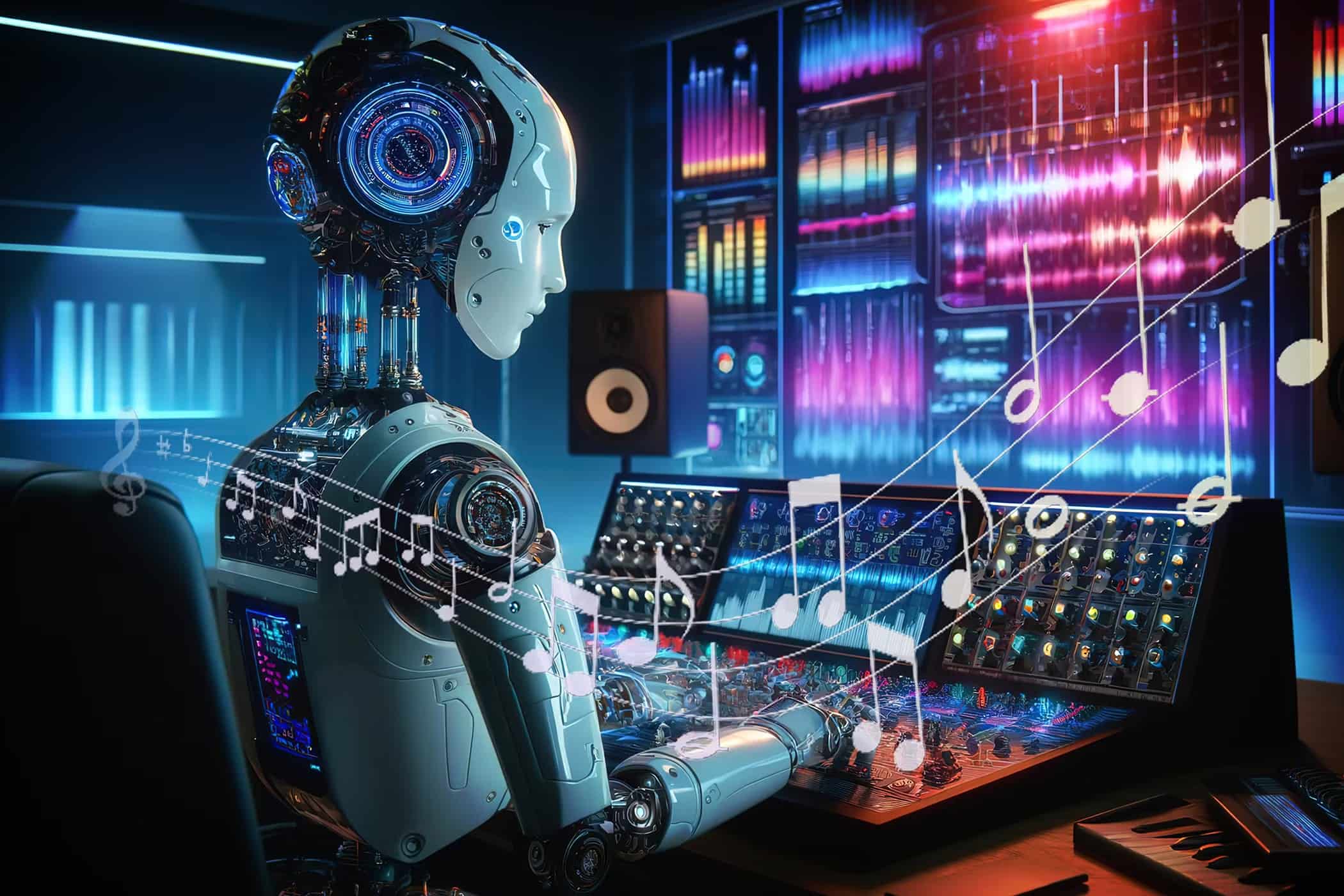
As of late 2025, AI music is disrupting traditional royalty-free libraries but has not replaced them for professional use.
While generative AI tools like Suno and Udio can now create “good enough” background tracks for pennies, they lack the legal safety and copyright exclusivity that businesses require. In response, major libraries like Epidemic Sound and Artlist have not died out; instead, they have evolved into “hybrid” platforms that combine human-composed music with AI editing tools.
The Core Conflict: Legal Safety vs. Infinite Supply
The biggest barrier preventing AI from replacing libraries is not quality—it is copyright law.
| Feature | AI Generators (Suno, Udio) | Royalty-Free Libraries (Epidemic, Artlist) |
|---|---|---|
| Ownership | Weak. Paid plans grant “commercial rights,” but US courts have ruled purely AI works are public domain. You generally cannot copyright the output. | Strong. You receive a license for a copyrighted work. The library indemnifies you against lawsuits. |
| Exclusivity | None. Because AI works may be public domain, you technically cannot stop others from using your “original” AI song if they access it. | Protected. The license guarantees your right to use the track, and the library aggressively protects its catalog from unauthorized use. |
| Liability | High Risk. If the AI was trained on copyrighted works (a major ongoing legal battle), users could theoretically be liable. Terms often limit platform liability to nominal amounts (e.g., $100). | Safe. Enterprise plans often include substantial insurance/indemnification against copyright claims. |
| Cost | Low. ~$10–$30/month for “unlimited” generation. | Moderate. ~$10–$50/month for access to a finite catalog. |
Why Libraries Are Surviving: The “Hybrid” Pivot
Instead of being replaced, traditional libraries are integrating AI to solve their biggest weakness: searchability and flexibility. By late 2025, the “static” library model is dead, replaced by AI-augmented libraries.
- Epidemic Sound “Adapt” (Launched Sept 2025): Rather than generating fake music, this tool lets you take a human-composed track and use AI to remix it instantly—changing the length, removing instruments, or altering the mood—while retaining the legal protection of a human-authored work.
- Artlist & Voiceovers: Artlist has expanded beyond music into AI voiceovers and “search by vibe,” using AI to surface human content that matches a video’s emotional tone.
- Spotify & Streaming: Platforms are using AI to generate “functional” ambient music (white noise, lo-fi study beats), eating into the bottom of the stock music market, but leaving the premium tier for human artists.
When to Use Which?
The market has split into two distinct tiers based on the “value” of the music to the project.
1. The “Disposability” Tier (Use AI)
Best for: Social media shorts, internal presentations, podcasts, “throwaway” content.
- Why: If you need a 15-second lo-fi beat for a TikTok video, paying $15/month for a library is overkill. AI generators like Soundverse or Suno can produce this instantly for near-zero marginal cost.
- Risk: Low. If a copyright strike happens (unlikely for public domain AI), the video is just taken down.
2. The “Brand Asset” Tier (Use Libraries)
Best for: Commercials, brand themes, feature films, monetized YouTube channels with high revenue.
- Why: You need exclusivity and safety. A brand cannot risk its anthem being declared public domain or being sued because the AI accidentally plagiarized a protected song.
- Advantage: “Human” music still captures complex emotional arcs (e.g., a “hero’s journey” swell) better than current AI, which often struggles with long-form structure.
Future Outlook: The “Cyborg” Composer
Experts predict that by 2026, the distinction will blur further. We are moving toward a model where “stems” (individual instrument tracks) become the currency.
- Current: You license a finished song.
- Future: You license a “seed” (a melody or vibe created by a human) and use the library’s AI to generate a 30-second, 60-second, or 5-minute version that perfectly hits your video’s cut points.
Verdict: AI is not replacing royalty-free libraries; it is forcing them to upgrade. If you are a business professional, keep your library subscription for legal safety, but use AI tools for drafting ideas or filling “dead air” where copyright doesn’t matter.