
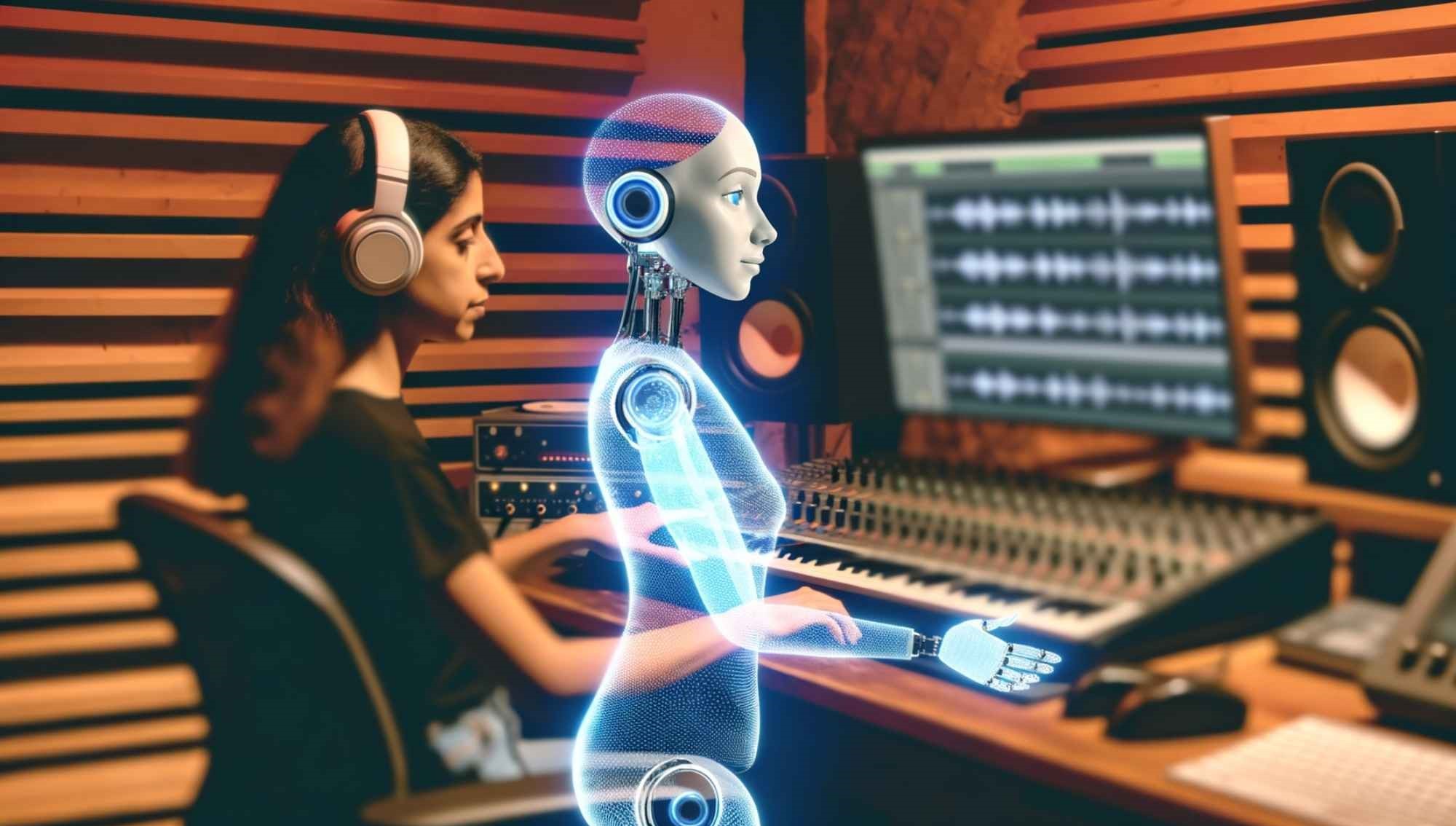
The artificial intelligence music generation sector has emerged as one of the most actively funded areas within the broader AI landscape, with several startups securing hundreds of millions of dollars from prominent venture capital firms. The momentum reflects both investor confidence in the transformative potential of AI-generated music and growing mainstream adoption among creators and consumers.
Market-Leading Funding Rounds
Suno’s Dominant Position
Suno has established itself as the market leader with an extraordinary funding trajectory. Most recently, in November 2025, the Cambridge-based AI music platform raised $250 million in Series C funding at a $2.45 billion post-money valuation. This round was led by Menlo Ventures and included participation from NVentures (NVIDIA’s venture capital arm), Hallwood Media, Lightspeed, and Matrix. The funding represents a remarkable 5x increase from Suno’s $500 million valuation just six months earlier in May 2024.
Suno’s growth metrics underscore its market dominance. The company has reached $200 million in annual revenue and boasts nearly 100 million registered users who collectively generate approximately 7 million tracks daily. This success came despite ongoing litigation from major music labels—Sony Music Entertainment, Universal Music Group, and Warner Music Group all filed lawsuits alleging copyright infringement in Suno’s training data. However, investor confidence remained undeterred by these legal challenges.
Suno’s earlier Series B round in May 2024 secured $125 million and was led by Lightspeed Venture Partners, with participation from investors including Nat Friedman, Daniel Gross, Matrix, and Founder Collective. The platform operates on a freemium model with subscription tiers at $8 and $24 per month, alongside a commercial creator version launched in September.
Music AI’s Ethical Approach
Music AI, a Salt Lake City-based company founded by Geraldo Ramos, Eddie Hsu, and Jardson Almeida, secured $40 million in Series A funding in January 2025, led by Connect Ventures (a partnership between Creative Artists Agency and NEA) and monashees. This investment represented validation for the company’s ethical approach to AI music creation, with its technology built on fully licensed content to ensure creator compensation. The company operates both B2B (Music.ai) and B2C (Moises.ai) platforms.
The funding round included notable music industry figures including 3LAU, Freddy Wexler, and Alexander23, alongside venture capital participants Kickstart, Samsung Next, Toba Capital, Valutia, and Pelion.
Emerging Players and Specialized Solutions
Mirelo’s Audio-for-Video Specialization
In December 2025, Berlin-based audio AI startup Mirelo emerged from stealth with $41 million in seed funding, making it one of the largest seed rounds for an AI audio startup. The round was led by Index Ventures and Andreessen Horowitz (a16z), with participation from Atlantic Labs, TriplePoint Capital, and angel investors including Arthur Mensch (Mistral AI) and Thomas Wolf (Hugging Face).
Mirelo addresses a specific market gap: while AI has revolutionized text, image, and video generation, sound design remains laborious. The company’s core product, Mirelo SFX, analyzes visual content to automatically generate and synchronize matching sound effects and music for video. With this funding, the startup plans to triple its team and launch “Mirelo Studio,” a creator platform for professional and casual users.
Aiode’s Rights-Managed Approach
Aiode, an Israeli startup, has positioned itself as a copyright-conscious alternative in the AI music space. In September 2025, the company closed a $5.5 million seed extension round led by Horizon Capital, building on an earlier $5 million seed round. Aiode distinguishes itself through a “clean room” approach: its AI models are trained exclusively on licensed music, with compensation mechanisms built into the platform.
The company has gained recognition through partnerships with Abbey Road Studios and collaborations with artists and educators, positioning itself as a creator-first alternative that emphasizes professional workflows.
Udio’s Strong Market Entry
Udio, developed by former researchers at Google DeepMind, launched in April 2024 with $10 million in seed funding led by Andreessen Horowitz. The founding team includes David Ding (CEO), Conor Durkan, Charlie Nash, Yaroslav Ganin, and Andrew Sanchez. Notable angel investors included Instagram co-founder Mike Krieger, Google Gemini head Oriol Vinyals, and music industry figures will.i.am, Common, and Tay Keith.
Market Context and Growth Trajectory
The AI music generation market is experiencing explosive growth. The generative AI music sector is projected to reach $2.92 billion in valuation in 2025, with forecasts suggesting expansion to $18.47 billion by 2034. Suno’s $2.45 billion valuation alone represents a substantial portion of this emerging market.
Industry Partnerships and Strategic Developments
Beyond startup funding, major music companies have begun strategic partnerships with AI firms. Universal Music Group and Stability AI announced a strategic alliance in October 2025 to co-develop professional-grade AI music creation tools with ethical considerations. Similarly, Warner Music Group and Stability AI partnered in November 2025 to build responsible AI tools for music creation.
Key Investment Themes
Several patterns emerge from the funding landscape. First, ethical AI and creator compensation have become critical differentiators, with investors showing preference for companies using licensed content (Music AI, Aiode) alongside those pursuing licensing deals retroactively. Second, market success and growth metrics have proven more persuasive to investors than legal uncertainty, as demonstrated by Suno’s continued funding despite copyright litigation. Third, specialization and vertical solutions like Mirelo’s video-to-audio focus represent new investment opportunities distinct from general music generation platforms.
The influx of capital into AI music startups reflects a broader conviction that AI-generated music represents a genuine shift in creative production—one that will reshape how music is composed, produced, and distributed globally. With nearly a billion dollars in venture funding flowing into the sector in recent years, these startups are rapidly moving from experimental technologies to mainstream creative tools.