
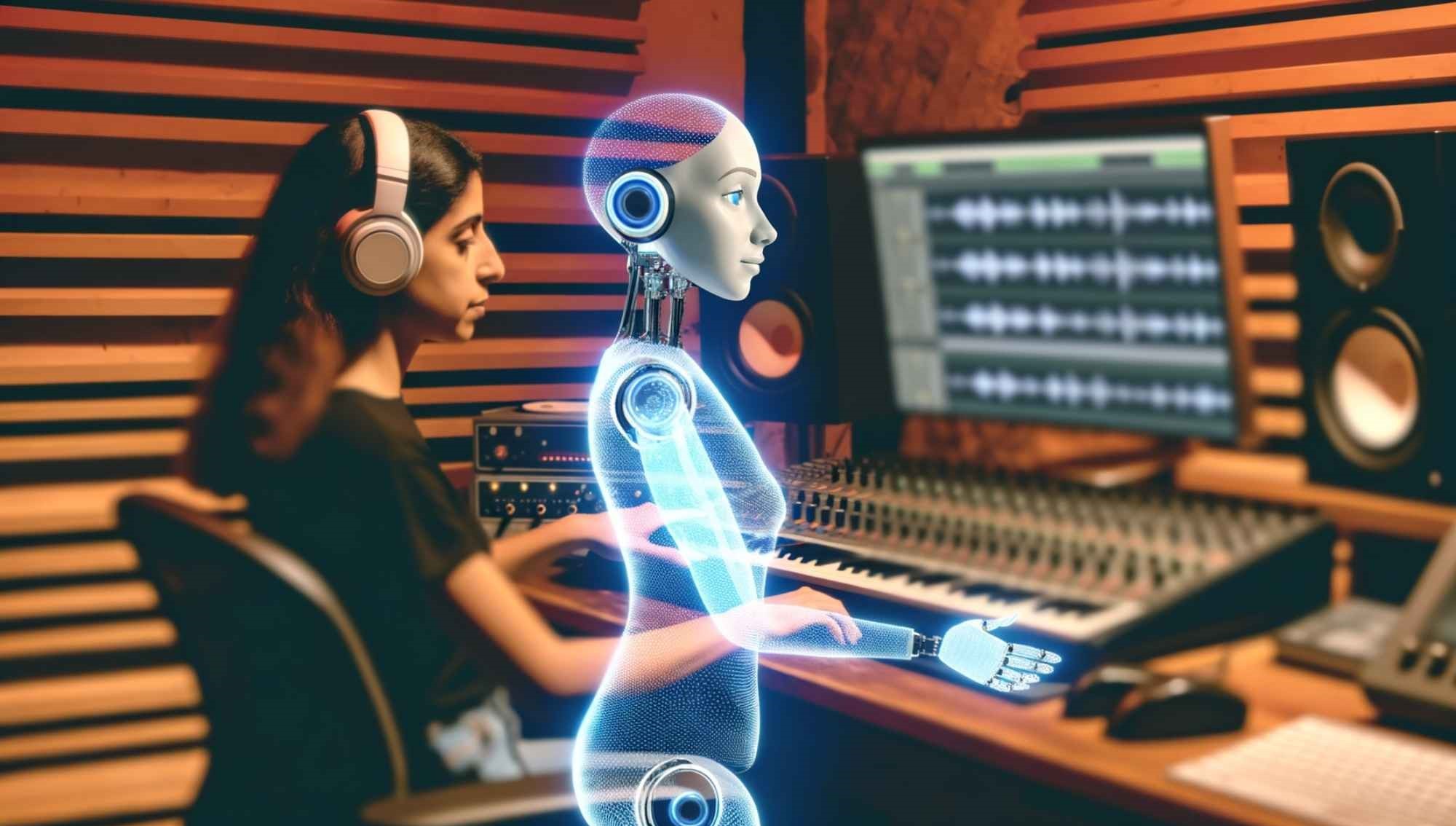
The intersection of artificial intelligence and music copyright has emerged as one of the most contentious and rapidly evolving areas of intellectual property law. As AI-generated and AI-assisted music become increasingly prevalent, regulators, courts, and industry stakeholders are grappling with fundamental questions about authorship, fair use, voice protection, and fair compensation for human creators.
Copyright Protection for AI-Generated Music
The landscape for copyrighting AI-generated music underwent significant clarification in January 2025 when the U.S. Copyright Office issued comprehensive guidance reaffirming that purely AI-generated compositions without human creative intervention cannot receive copyright protection. This principle reflects the longstanding copyright requirement that protection extends only to works of human authorship. However, the Copyright Office has established a meaningful distinction: AI-assisted music qualifies for copyright protection when demonstrable human creative input shapes the expressive elements of the work.
The Copyright Office’s framework for assessing eligibility distinguishes between using AI as an assistive tool versus using AI as an autonomous creator. When musicians exercise significant creative control—through prompt engineering, editing melodies, writing original lyrics, arranging compositions, or making arrangement decisions—the resulting work meets the originality threshold and qualifies for registration. Notably, the Office clarified that merely providing prompts to an AI system does not constitute sufficient human authorship. To strengthen copyright claims, creators should document each creative step, including prompt transcripts, project revisions, and descriptions of human creative decisions.
The impact of this guidance has been substantial. The U.S. Copyright Office has registered more than one thousand works where applicants disclosed and disclaimed AI-generated material according to its guidance. This represents a practical pathway for musicians to secure legal protection for hybrid human-AI creations.
Training Data and Fair Use: A Shifting Legal Landscape
A central controversy in AI music involves whether companies can legally train their models on copyrighted music without explicit permission or licenses. The recording industry, represented by major labels Sony Music Entertainment, Universal Music Group, and Warner Music Group, has challenged this practice through multiple lawsuits filed in June 2024 against AI music generation platforms Suno and Udio. These lawsuits allege that both companies used copyrighted recordings to train their AI systems without authorization and can replicate specific songs when prompted correctly, seeking damages of up to $150,000 per song.
A pivotal legal development occurred in February 2025 when a U.S. court ruled in the Thomson Reuters v. Ross Intelligence case that using copyrighted material to train AI models does not qualify as fair use. This case, though technically limited to non-generative AI systems, provides significant precedent that music companies are leveraging in their arguments. The court found that the use was not sufficiently transformative—a key fair use criterion—because the AI output produces music that directly competes with the original works. Additionally, courts have noted that training data copying undermines the licensing market, as companies like Suno and Udio potentially could have obtained legitimate licenses but chose not to.
This legal trajectory suggests mounting difficulty for AI companies defending training practices under fair use doctrine, particularly as courts increasingly recognize that AI-generated music outputs directly compete economically with original human-created works.
International Regulatory Frameworks
International approaches to AI and music copyright reflect diverse strategies for balancing innovation with creator protection.
Sweden’s Pioneering Licensing Model: In September 2025, Sweden’s STIM (Swedish Performing Rights Society) launched what it claims is the world’s first collective AI music license with the startup Songfox, representing a landmark shift toward consensual, compensated AI training. This framework requires explicit artist consent for training data use and employs neutral, third-party attribution technology (Sureel) to trace AI-generated outputs back to the human-created works that influenced them. The model structures compensation to flow through both model training and downstream consumption of AI outputs, ensuring artists receive upfront value when their works contribute to AI training plus revenue sharing as the AI generates new works. STIM describes this as a “stress-test” for what could become a global standard, with the Swedish model serving as a blueprint for other jurisdictions.
European Union Framework: The EU’s Copyright Directive in the Digital Single Market (CDSM) provides a harmonized copyright framework for AI. It includes provisions for text and data mining (TDM) that permit commercial uses unless rightsholder’s opt-out, reinforced by the EU Artificial Intelligence Act. However, enforcement has proven complex, as most European copyright laws remain grounded in human-centered concepts, requiring adaptation to address human-AI collaboration scenarios.
Denmark’s Voice Rights Proposal: In June 2025, Denmark introduced groundbreaking legislation that would grant copyright-like protection over individuals’ faces, voices, and bodies as a form of intellectual property, making unauthorized AI deepfake music automatically illegal. This approach represents the first explicit national-level voice rights protections independent of traditional copyright, personality rights, or privacy law.
Voice Protection and Personality Rights
Distinct from traditional copyright protections, voice and likeness protections have emerged as separate legal categories addressing AI-generated imitations.
Tennessee’s ELVIS Act: The Ensuring Likeness, Voice and Image Security (ELVIS) Act, effective July 1, 2024, represents the first U.S. state legislation explicitly criminalizing unauthorized AI voice cloning. The law expands Tennessee’s prior publicity rights protections to include voice, with violations treated as Class A misdemeanors subject to criminal and civil liability. Given Tennessee’s significant music industry—supporting 60,000 jobs and contributing $5.8 billion to national GDP—this legislation carries substantial practical weight.
Federal No AI FRAUD Act: At the federal level, the proposed No Artificial Intelligence Fake Replicas and Unauthorized Duplications (No AI FRAUD) Act would establish a property right for voice and likeness, imposing penalties on unauthorized synthesis. The legislation has received support from music industry organizations including the RIAA and National Music Publishers’ Association.
Platform Enforcement: Spotify announced in September 2025 a new impersonation policy clarifying that unauthorized vocal impersonation is prohibited unless the impersonated artist has explicitly authorized usage. This represents platforms taking proactive enforcement roles independent of legislation.
Licensing and Royalty Distribution
AI has fundamentally altered both how licenses are structured and how royalties are calculated and distributed.
Licensing Models: AI music licensing frameworks range from royalty-free arrangements to complex revenue-sharing structures. Platforms like Mureka issue full commercial licensing rights for every AI-generated track, guaranteeing distribution and sync rights without ongoing royalty obligations. The more sophisticated STIM model combines upfront licensing fees, revenue sharing from AI platform operations, and downstream royalties from AI-generated content consumption—a tripartite compensation structure designed to ensure multiple revenue streams for creators.
Real-Time Royalty Tracking: AI has enabled real-time tracking of music usage across platforms, dramatically improving payment speed and accuracy compared to traditional systems. Machine learning algorithms now constantly monitor music use and apply complex licensing terms automatically, reducing errors and accelerating creator compensation. This represents a significant operational improvement for independent artists who previously lacked resources to track music usage across multiple platforms.
Blockchain Integration: Blockchain technology complements AI by providing transparent, immutable records of music rights and enabling smart contracts that automatically distribute royalties. NFT tokenization allows musicians to sell fractional ownership of royalty streams, with smart contracts ensuring original artists continue receiving royalties from subsequent sales.
Key Legislation and Transparency Requirements
Generative AI Copyright Disclosure Act: Introduced by Representative Adam Schiff in April 2024, this legislation requires AI companies to disclose all copyrighted works used in training datasets to the U.S. Copyright Office at least 30 days before model release, with penalties starting at $5,000 for non-compliance. The bill does not ban copyrighted material use but mandates transparency, enabling copyright holders to track unauthorized use and pursue enforcement. Major music industry organizations including the RIAA and National Music Publishers’ Association support the legislation.
Industry Impact and Economic Concerns
The economic implications of AI for music creators are substantial. A 2024 CISAC study projected that AI could reduce music creators’ revenues by as much as 24 percent by 2028 if current trajectories continue unchecked. This concern has motivated the development of protective frameworks like STIM’s licensing model and legislative initiatives like the Copyright Disclosure Act.
Ongoing Legal Battles
The Concord Music Group v. Anthropic case illustrates the complexity of AI copyright litigation. While the court denied Concord’s preliminary injunction seeking to prevent Anthropic from using lyrics to train its Claude AI model, it approved a settlement requiring Anthropic to maintain “guardrails” preventing Claude from reproducing copyrighted lyrics in its outputs. This partial victory leaves the fundamental question unresolved: whether using copyrighted works for AI training constitutes copyright infringement—a question the court indicated must be resolved through litigation or legislation rather than judicial intervention.
Collective Management Organization Challenges
Collective management organizations (CMOs) like PRS for Music and PPL—which traditionally manage licensing and royalty distribution—face significant operational challenges adapting to AI-generated and AI-assisted music. Current registration systems fail to adequately account for human-AI collaboration, making it difficult to determine authorship, allocate ownership, and distribute royalties fairly. The UK-based study “Music and the Machine” identified this structural misalignment as a critical gap requiring framework updates that recognize joint human-machine authorship and establish equitable royalty distribution mechanisms.
Ethical Frameworks and Artist Consent
Beyond legal compliance, ethical approaches to AI in music have emerged emphasizing creator consent and transparency. Initiatives like Holly Herndon and Mat Dryhurst’s Spawning API integrate a “consent layer” into AI projects, allowing artists to authorize or opt-out of data usage through tools like “Have I Been Trained?” These frameworks emphasize that ethical AI music should be evaluated through lenses of rights, justice, utilitarianism, and care—requiring artists to actively assess impacts and maintain transparency about AI tool usage and commercial motivations.
Future Outlook
The music industry’s AI copyright landscape continues evolving rapidly. While the U.S. Copyright Office concluded that existing copyright frameworks are flexible enough to address AI issues without requiring new legislation, ongoing litigation and international regulatory developments suggest the legal framework will continue adapting significantly. The convergence of legislative transparency requirements, voice protection statutes, licensing innovations like STIM’s model, and platform enforcement policies indicates the industry is moving toward a hybrid regulatory ecosystem combining copyright law, personality rights protections, and contractual licensing arrangements designed to protect human creators while permitting legitimate AI innovation.